VEX VRC V5 · For returning teams

Stop winging it. Start engineering.

A six-strand curriculum for VRC V5 teams that already have one season behind them. Leave single-file VEXcode for C++, PROS, and LemLib. Leave guessing ratios for a real friction audit. Leave last-minute CAD for a team OnShape document with proper version history. Run coding, building, CAD, project management, and the engineering notebook as five parallel strands held together by one set of doctrines.
VEX VRC Competitive Curriculum

Who this is for

A second course, not a first one.

If your team already has a working VEXcode program, knows what a motor and a sensor are, and is now asking how do we stop winging it? — you are the audience. If you are still learning what a while loop is, start with a beginners' course first and come back when you have a first season under your belt.

Doctrine 1

Prototype before you CAD

Cardboard, zip-ties, and a sketch on grid paper can answer in twenty minutes a question that a CAD model cannot answer in twenty hours. Prototype the question, not the final part.

Doctrine 2

Readings vs robot vs ground

Every autonomous bug lives in one of three places: the sensor readings are lying, the code is misinterpreting honest readings, or the physical robot is not doing what the motors commanded. Debug in that order.

Doctrine 3

Sandwich, brace, box

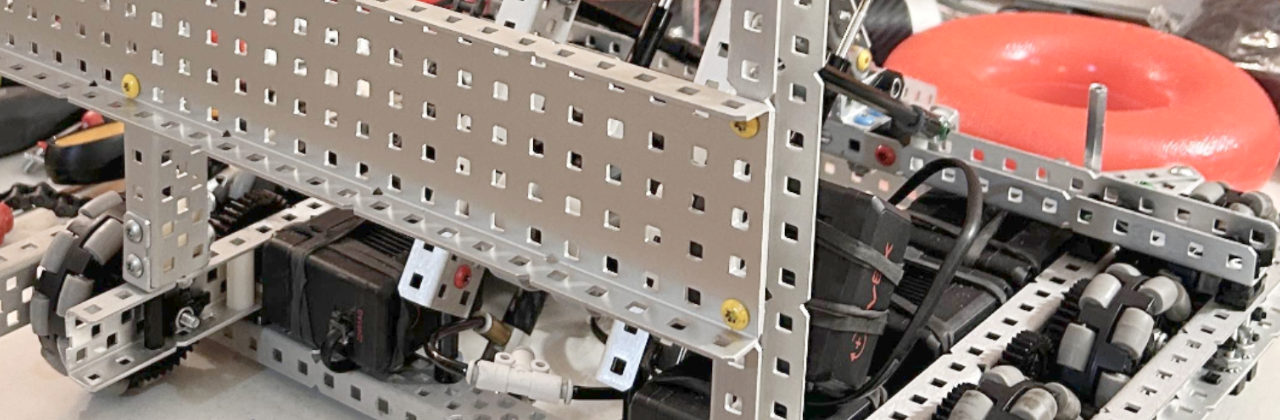
Every load-bearing joint is sandwiched on both sides of the shear plane. Every long span is braced. Every torsion-critical beam is boxed. This is not advice — it is the build doctrine.

Doctrine 4

Iterate by cycles

A design cycle is design → build → test → reflect → update the Problem Identification Log. Complete cycles move the robot forward. Partial cycles feel like work and move nothing.

The stack

Six tools. No hedging.

The curriculum commits to one tool at every layer and teaches it deeply. No side-by-side comparisons with the alternatives. No half-learned second options. Each tool is device-agnostic — follow the upstream install page for whatever laptop you happen to own.

C++The language every competitive-tier VRC team writes in. Strong typing catches mistakes at compile time instead of on the field.
Visual Studio CodeThe editor. Free, with full-project search, refactoring, and a real extension ecosystem.
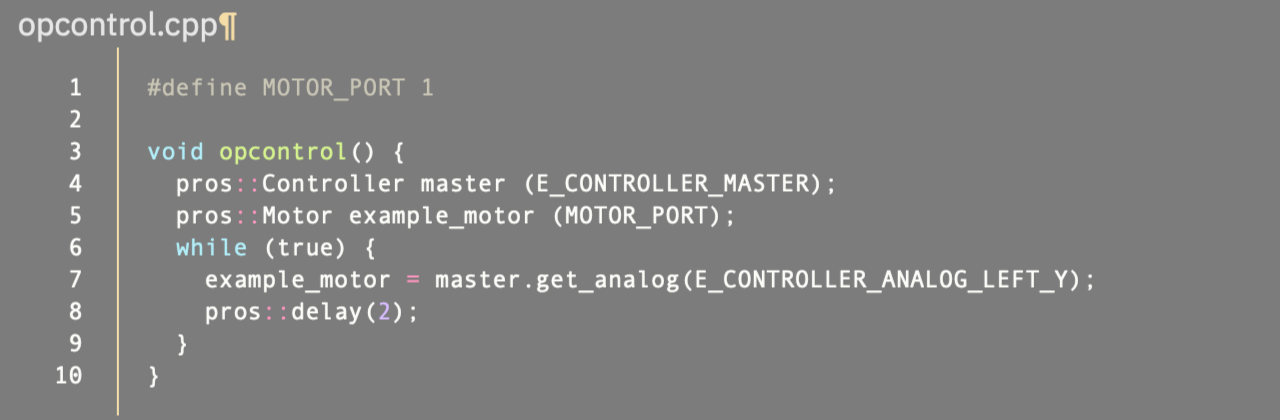
PROSPurdue Robotics Operating System. A proper embedded C++ toolchain with real error messages, multi-file projects, and an open library ecosystem.
LemLibA modern, maintained motion library. Odometry, PID, feedforward, and high-level primitives like moveToPoint.
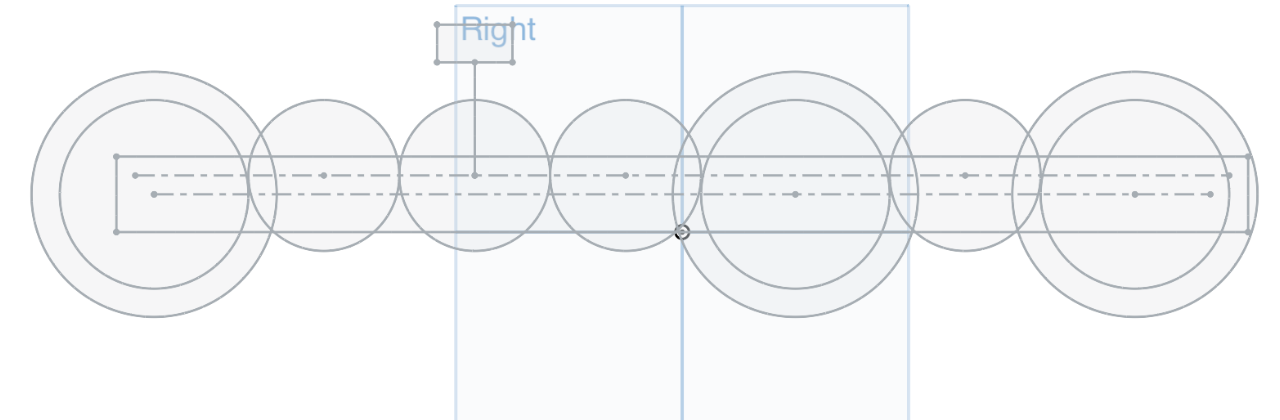
OnShapeCloud-native CAD. Real-time multi-user editing, full version history, runs entirely in a browser — open the team's CAD from any device.
Git + GitHubVersion control. One repo per team, branch per feature, pull request per review. Non-negotiable.

The curriculum

Six chapters. Five parallel strands.

Chapter I is read first — it is orientation. Chapters II–VI are the five strands, run in parallel with explicit cross-strand prerequisites named in every tutorial.

Chapter 1 - Orientation
Chapter I of VI · Orientation

Foundations

Who this curriculum is for, the six tools it commits to, the four doctrines, the seven non-negotiables, and how to run the five strands in parallel. Read this first. Roughly two hours.

6 tutorialsRead first
Chapter 2 - Coding
Chapter II of VI · Coding

C++ / PROS / LemLib

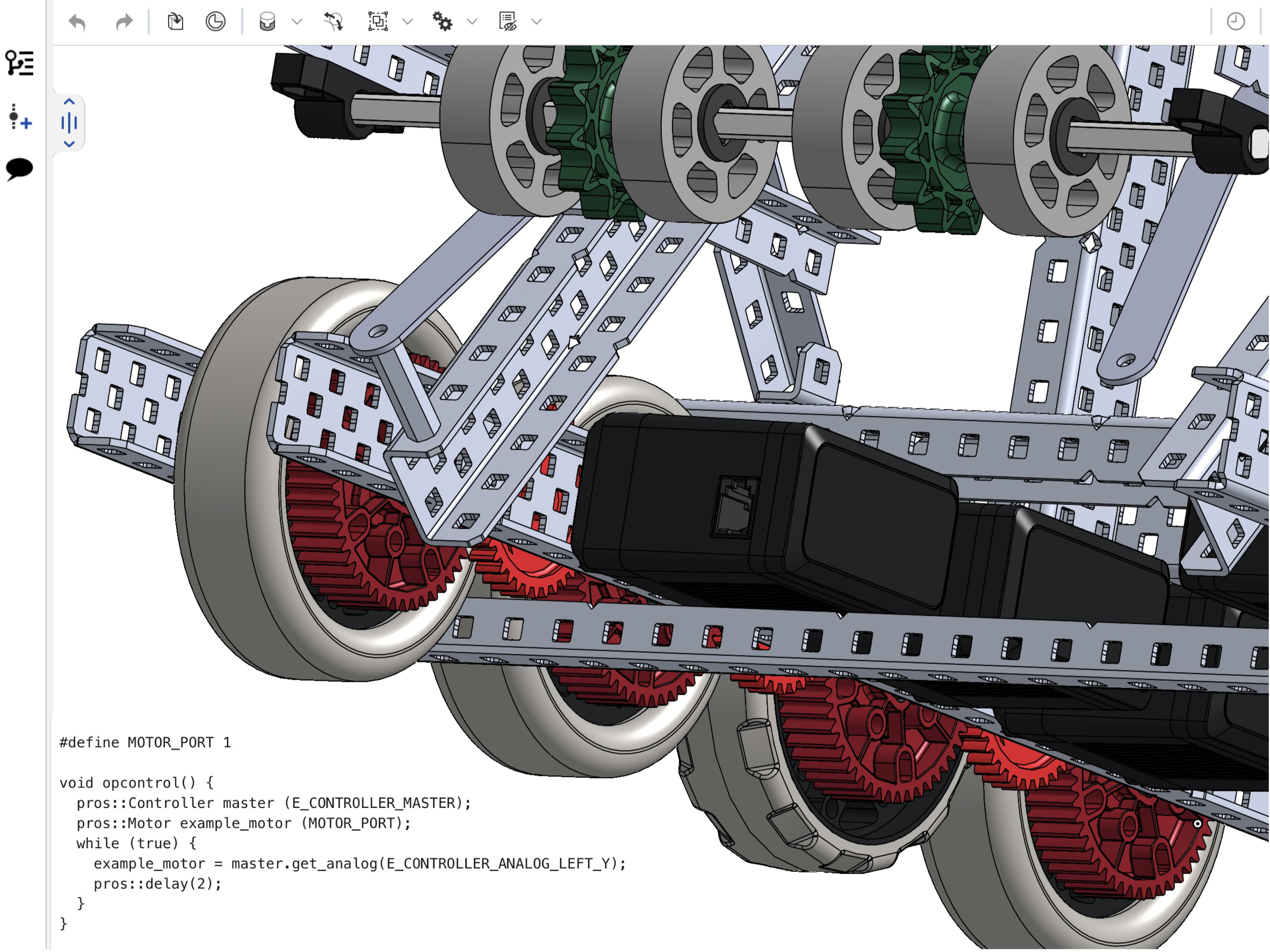
Leave VEXcode for PROS. First real project, Git, heading and lateral PID, tracking-wheel odometry, LemLib motion primitives, state-machine autonomous, and a competition-day tuning workflow.

39 tutorials6 tiers
Chapter 3 - Building
Chapter III of VI · Building

Building & Engineering

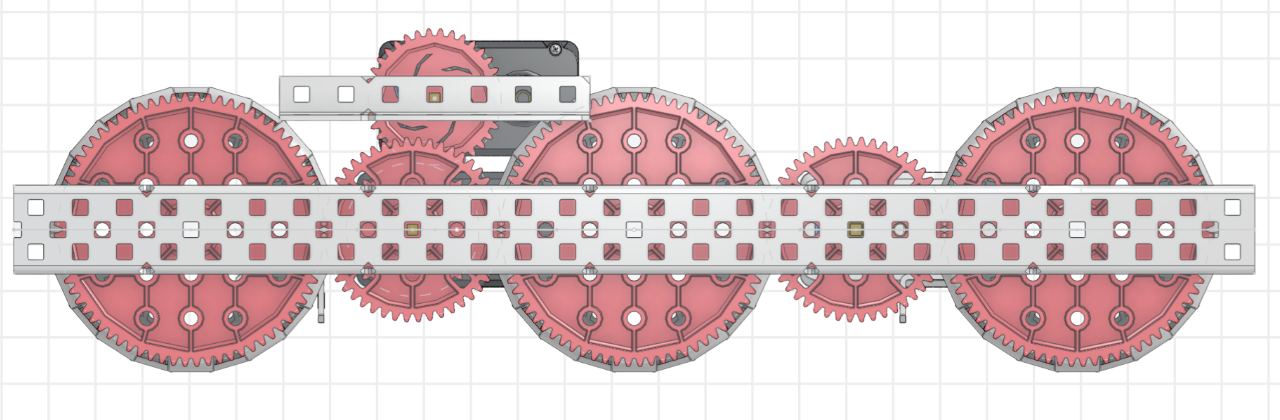
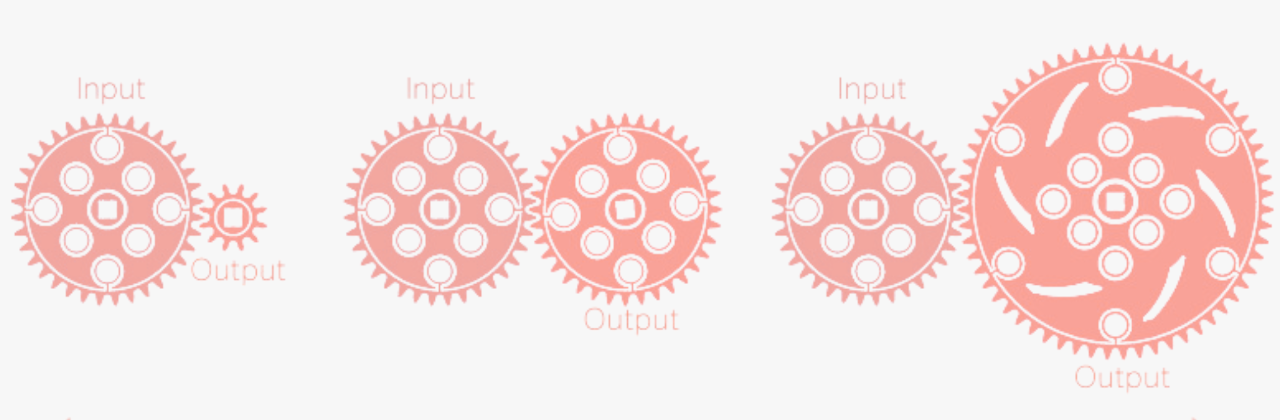
Prototype-first. Frame doctrine. Gear ratios as a physics decision. Screw theory, sandwich rules, the friction audit. Intakes, lifts, pneumatics geometry, and a pre-competition build audit.

27 tutorials5 tiers
Chapter 4 - CAD
Chapter IV of VI · CAD

OnShape

Sketches-as-planning. Part studios. Assemblies with real motion. Parametric design and Variable Studios. CAD-first design reviews, range-of-motion validation, and a clean handoff to the build.

23 tutorials6 tiers
Chapter 5 - Project Management
Chapter V of VI · PM

Project Management

Sprints, stand-ups, retros. The Problem Identification Log, decision matrices, and design reviews. A cross-strand dependency map and a running-week cadence that keeps five strands synchronised.

12 tutorialsSet up first
Chapter 6 - Notebook
Chapter VI of VI · Notebook

Engineering Notebook

REC rubric-aligned entries: PIL as notebook entries, brainstorms, decision matrices, build logs, test logs, Innovate Award submissions, and how to survive the judging interview.

20 tutorialsREC aligned